

Singer’s Spine Surgery
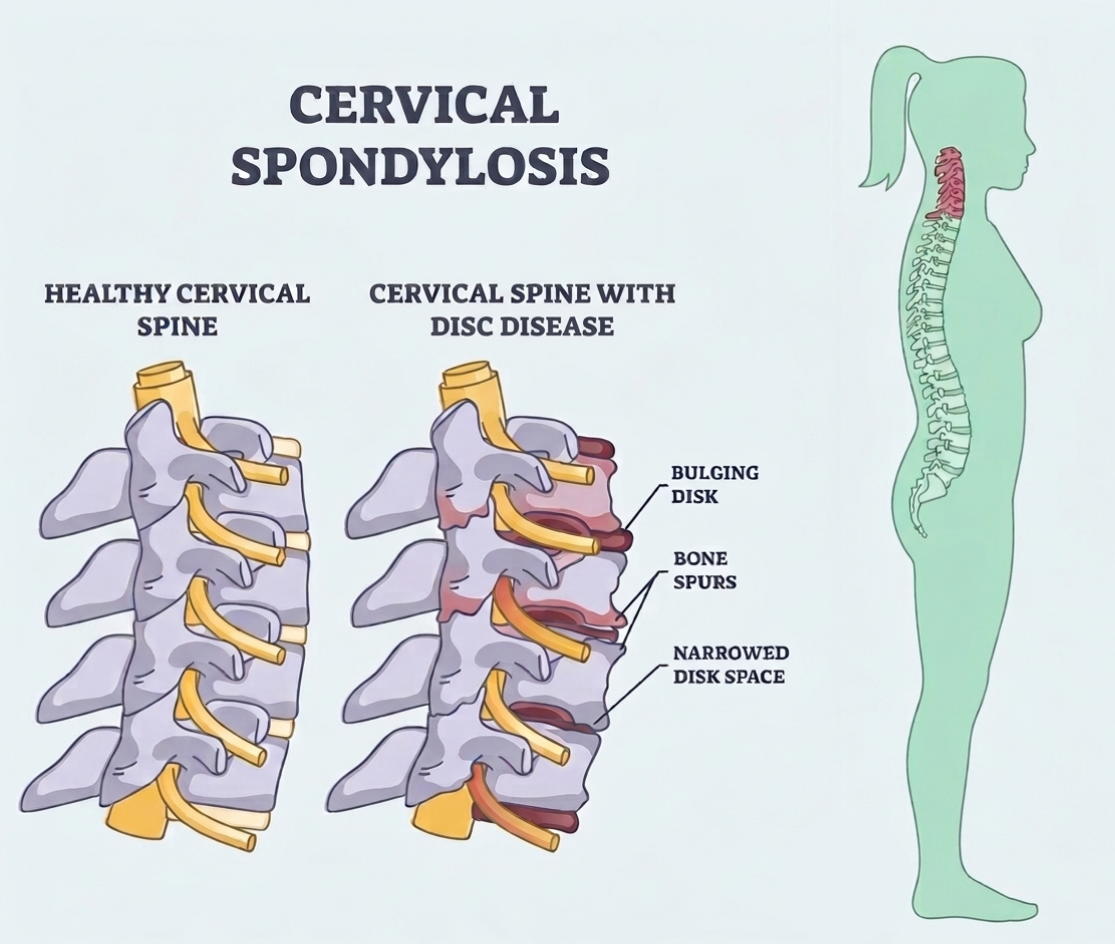
Surgery of the cervical spine (neck) involves removing damaged spinal discs and either replacing them with an artificial disc or fusing the adjacent vertebrae (bones of the spine).
The spinal column is a bony and cartilaginous structure that spans from the bottom of the skull to the tailbone. It serves the dual purpose of protecting the delicate spinal cord and allowing for flexibility, stability, and mobility of the trunk. It achieves this complex goal through a design of alternating bones and cartilaginous discs.
Movement occurs at the discs and the discs that bear the most movement are most susceptible to degeneration. When discs degenerate, they lose elasticity and collapse, resulting in compression of the nerves of the spinal cord that exit at that level. Symptoms relate to the level at which the compression is occurring.
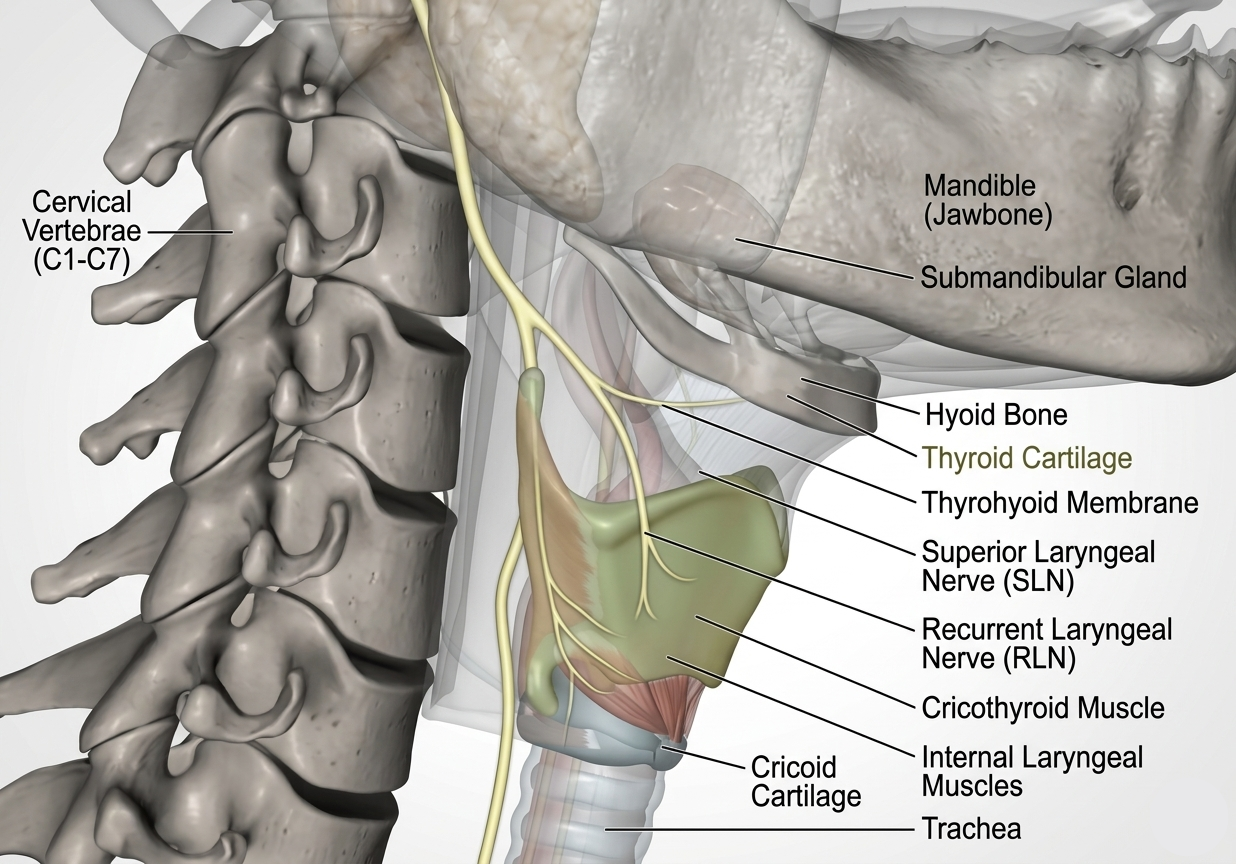
For a singer, actor, or anyone who uses their voice for a living, this surgery comes with additional, potentially career-ending risks. The nerves that control the voice are in close proximity to the cervical spine and, if damaged, can result in temporary or permanent loss of vocal range and endurance. Those who also play an instrument have the dual risk of voice injury and poor surgical outcome resulting in incomplete recovery or even worsened symptoms. This is the reason many professional voice users delay surgery.
When considering cervical spine surgery, the vocal athlete has to navigate the pain and symptoms from their disc disease as well as their fear of vocal complications

The most common discs to be damaged are those located between C5-6 (the fifth and sixth cervical vertebrae) and C6-7. When these levels are affected the most common symptoms are
Numbness or tingling of the hands
Weakness of the hands
Pain in the arms and hands
Loss of dexterity/clumsiness of one or both hands.
The goal of surgery is to reduce compression of the disc space, which occurs when the cartilaginous disc wears and becomes thinner. When the space between vertebrae is reduced, the nerves that exit the spine at that level become compressed. This results in pain, weakness, and limited function of the target muscles.
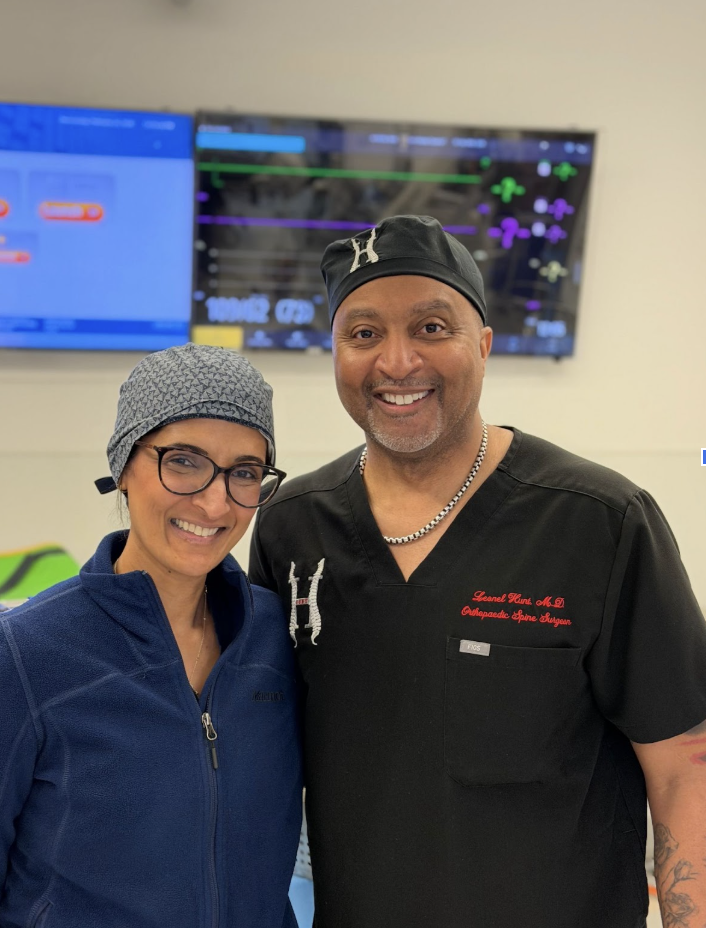
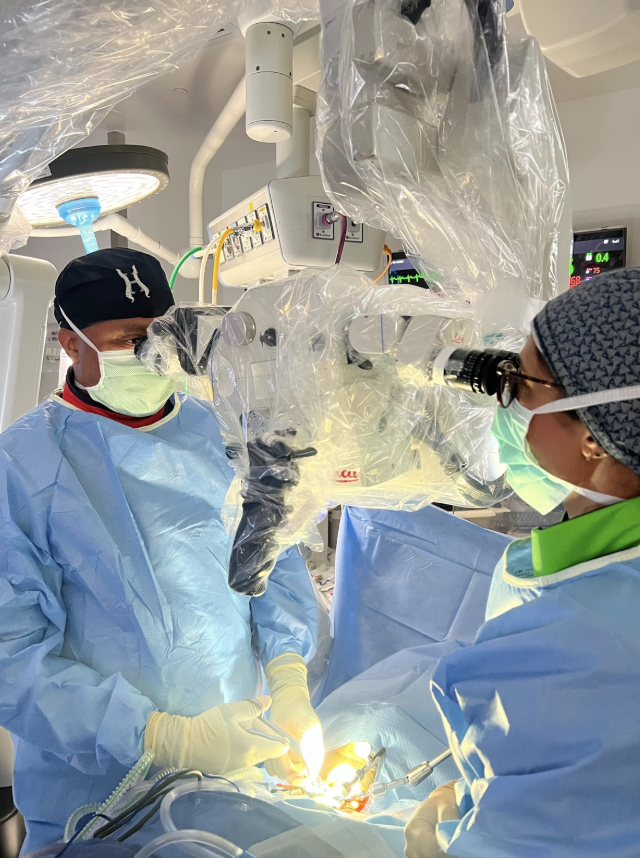
Center for Vocal Health has partnered with Hunt Spine to develop the only systematic approach to cervical spine surgery in vocal athletes.
Reena Gupta, MD (laryngologist and voice surgeon) and Leonel Hunt, MD(orthopedic surgeon) have created a comprehensive program that
Ensures appropriate patient selection for spine surgery
Evaluates and optimizes voice prior to surgery
Incorporates minimally-invasive surgical technique
Enhances and maximizes neck mobility
Has a combined two-surgeon approach to reduce operative time, soft-tissue trauma, and complication rates
Moves quickly to rehabilitation, including soft tissue mobilization to reduce swallowing and voice symptoms, voice rehabilitation, and neck mobilization, reducing scar tissue and shortening recovery
Has lower patient-reported pain and better patient outcomes
Returns vocal athletes to performance quickly and with the best possible voice outcome